

self leadership starts in the nervous system
Organizations are navigating a leadership landscape that has changed dramatically. Burnout and disengagement persist. Retaining good people is harder. Distraction is everywhere. Remote and hybrid work have changed how people connect and communicate. Managers are leading through constant change, while talented individual contributors are often stepping into leadership roles without ever being taught how to lead people.
LEADERSHIP DOESN’T HAPPEN IN ISOLATION
The way a leader responds to pressure is experienced by everyone they lead.
A leader who can stay grounded when something goes wrong, think clearly instead of reacting, receive difficult information without becoming defensive, and bring steadiness into uncertainty creates a very different experience for the people around them than a leader operating continually from urgency, threat or survival.
Illuminating Purpose develops self-leadership through nervous-system awareness and regulation—helping people build the internal capacity to lead themselves well, so they are better equipped to lead, influence and contribute to others.

regulation is contagious.
leadership gives it reach.
What you may be seeing
When people start checking out, there's usually more happening underneath.
Disengagement doesn't always announce itself. It can look like less initiative, fewer ideas, resistance to change, defensiveness around feedback, avoided conversations, strained working relationships or people doing what is required without contributing much beyond it.
Employees are also navigating sustained change, uncertainty and pressures across their lives. Over time, the nervous system can begin operating from patterns of protection—reacting, withdrawing, withholding, avoiding or simply getting through the day.
Understanding what's beneath the behavior gives people an opportunity to recognize their own patterns, understand the agency they still have and make a more deliberate choice about how they show up.
That is where self-leadership begins.
THE NERVOUS SYSTEM IS A LEADERSHIP CONVERSATION
This is the part of leadership development we're not talking about enough.
Self-leadership begins with awareness: the ability to recognize what is happening internally before automatically reacting from it. A self-led person is someone who becomes increasingly able to recognize those responses, regulate and choose what happens next.
At work, that capacity shows up in very practical ways: how someone communicates, receives and delivers feedback, makes decisions under pressure, navigates change, handles difficult conversations, takes responsibility, contributes ideas and recognizes what is—and isn't—within their control.
Leadership isn't only what you say or the strategy you set. People continually take cues from one another. A leader who can remain regulated under pressure has greater capacity to lead than one whose nervous system is continually signaling urgency, threat or catastrophe.
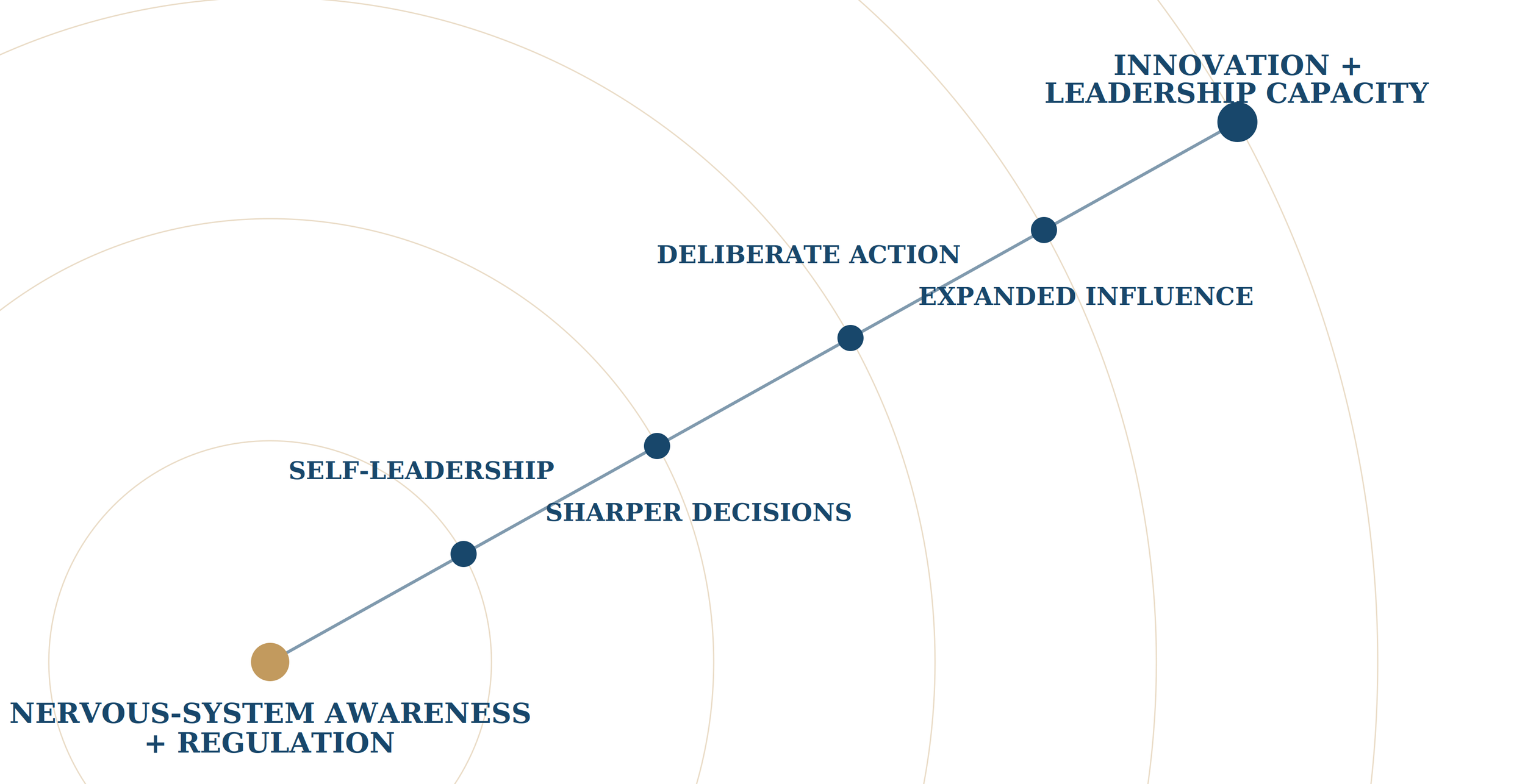
This is one reason self-leadership is crucial to the organizational conversation. A leader's internal capacity affects how they show up. How they show up influences the people they lead. Those individual interactions shape the way a team communicates, responds and works together—and those teams collectively shape the organization.
WHY A COMMON LANGUAGE MATTERS
When people throughout an organization have a shared understanding of nervous-system responses and self-leadership, they have a common way to recognize and talk about what's happening beneath behavior.
For the individual, that creates greater awareness and choice.
For the team, it creates a shared language for navigating pressure, feedback, conflict and change.
For the organization, it creates the opportunity for that awareness to ripple outward through communication, leadership, collaboration, adaptability and innovation.
And because this is an understanding of themselves—not simply another workplace framework—people can carry it beyond work into their relationships, families and lives.
The goal isn't an organization without pressure. It's people with greater capacity to lead themselves and others within it.
INTEGRITY + TRUST
The room belongs to the employees.
The patterns and insights belong to the organization.
When an organization invites me to work with its people, I take seriously both the trust the organization places in me and the trust employees extend once we're in the room together.
Personal stories remain personal. HR receives meaningful themes and patterns, not identifiable personal disclosures.
Participants help validate what I heard. Before the session closes, I reflect the major challenges, themes and opportunities back to the room so participants can clarify or correct my understanding.
Everyone in the room participates. HR and organizational leaders are welcome when appropriate, but no one attends simply to observe employees.
Attendance is intentional. Who will be in the room is discussed beforehand so the organization can make an informed decision, understanding that attendance can naturally affect candor.
Protecting employee trust and providing meaningful insight to the organization are not competing goals.
Both can be done with integrity.
WAYS TO WORK WITH
ILLUMINATING PURPOSE
Every engagement is tailored to the people in the room.
The core principles and frameworks remain consistent. The stories, applications, conversations and areas of emphasis are shaped around the organization, the audience and what they are actually navigating.
LUNCH & LEARNS + KEYNOTES
Focused, story-driven introductions to nervous-system awareness, self-leadership and leadership capacity.
3.5-HOUR WORKSHOPS
Interactive experiences for teams, managers and leaders to understand, practice and apply the work.
LEADERSHIP + TEAM RETREATS
Immersive experiences for deeper work around self-leadership, purpose, values, vision and communication.
INDIVIDUAL EXECUTIVE INTENSIVES
Private, concentrated one-on-one work for leaders ready for deeper development.
INVITED BACK FOR A REASON
“We were so excited to have her back with us, sharing her story and teaching us all about resilience and adaptability. So much that we do at Dress for Success is based on confidence building, and Kristyn embodies this skill as she addresses the need for us to not only navigate change, but to embrace it!
Within her speech, Kristyn reminds us that while we will all have to face change, we get to control how we respond and that we can choose to show up as our best selves.”
Amara Martin
Chief Executive Officer, Dress for Success Denver

WHY KRISTYN
I've lived this work from both sides of the room.
I spent close to three decades inside a large organization before building Illuminating Purpose, and the past decade coaching individuals and speaking to audiences as large as 3,000.
I know what it is to become disengaged at work and to believe the only answer is for something outside of me to change.
My experience taught me something different.
Changing how I showed up didn't require the circumstances to be different. It required learning to lead myself while I was still there.
That lived experience now sits alongside a decade of coaching people through deeper work around purpose, values, vision and self-leadership.
Today, I bring both into organizations because I understand the human being in the role and the business that role serves.
Those interests can be mutually beneficial.
start with a conversation
Tell me what you're seeing.
You don't need to know which offering you need before we talk.
We'll look at what's happening, what you've already tried, what you'd like to see differently and whether my work is relevant to what your organization and its people are navigating.
If there's a meaningful fit, I'll develop a recommendation around what we've discussed and we'll reconnect to walk through it together.